win%3Dalliance-networking-session
win-alliance-white
win-herastrau-win-real-estate
win%20real%20estate
win-brokers-broler-bucuri-de-lux
win-brokers-white
win-tireanu-motorsport-win-alliance%20copy
win-motorport-logo-alb

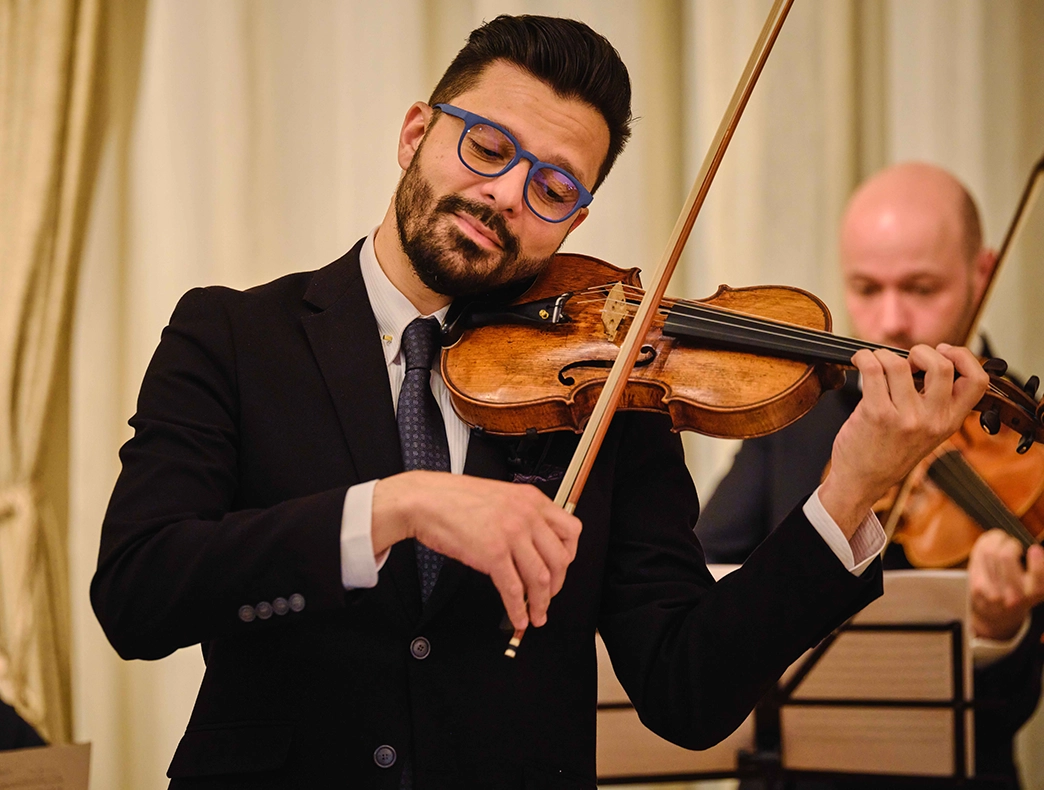
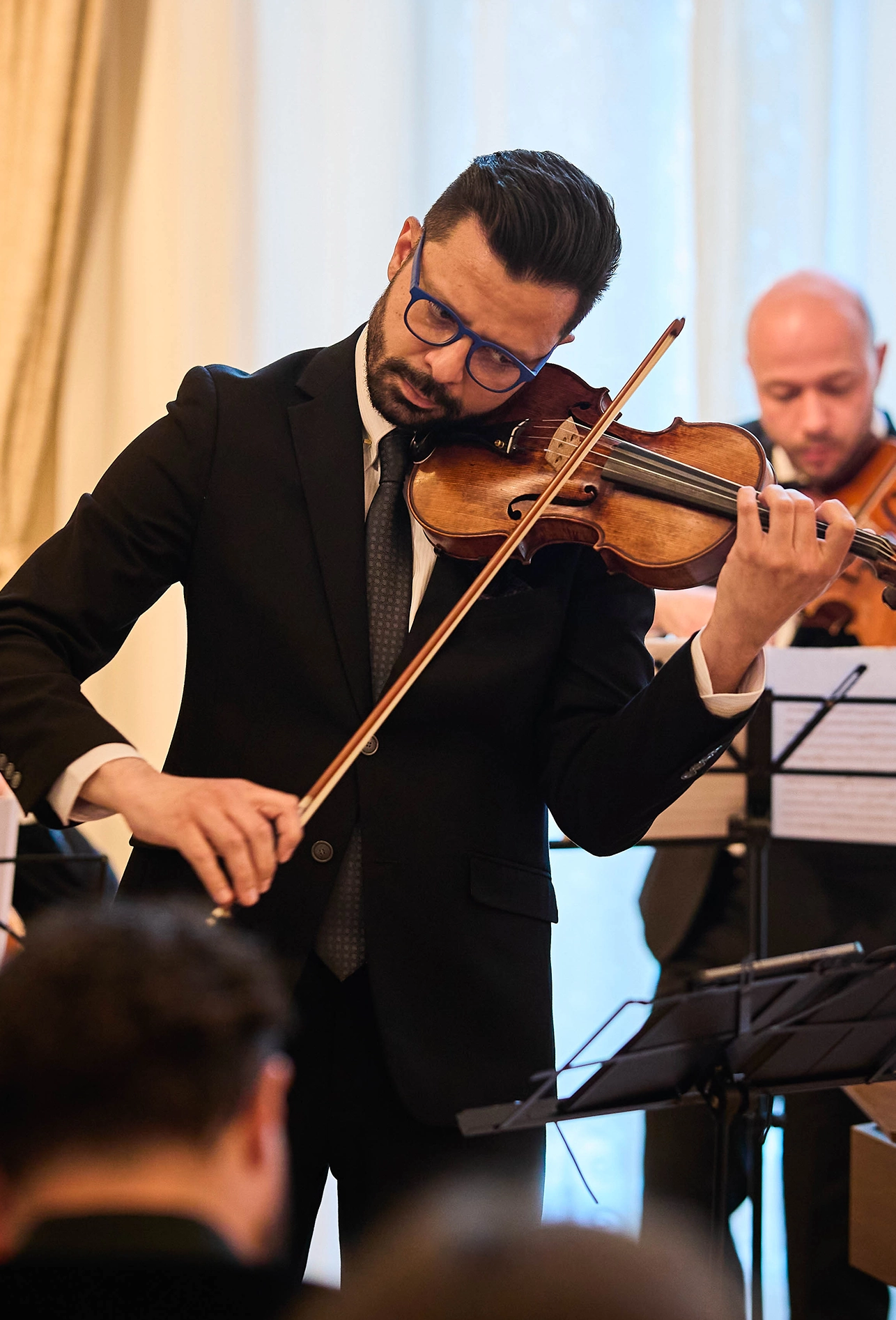
There`s a place where virtuosity meets the depth of expression, where the purity of sound captivates the audience with the promise of an unforgettable concert—that is where we find Răzvan Stoica. The musician, considered one of Europe`s finest violinists, achieved international recognition at a young age, with elegant modesty, and in 2009 earned the rare honor of playing the Stradivarius *Ex-Ernst* (1729). A masterpiece by Antonio Stradivari from his golden age, and one of the few instruments of its kind that can still be heard in concerts today, the instrument offers Răzvan Stoica the freedom to transcend the limits of the ordinary. Alongside his sister, pianist Andreea Stoica, and the Kamerata Stradivarius ensemble, the musician transforms every performance into special encounters with a sound that seems to echo from centuries past. 

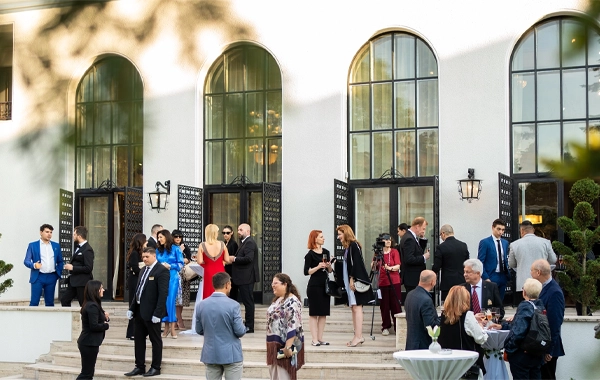
Musician Răzvan Stoica with KAMERATA STRADIVARIUS at WIN Gallery, May 18, 2026

WIN Gallery: A Stradivarius violin is often called the “voice” of an artist who has reached mastery. How would you describe yourself as a musician if the audience didn’t know what instrument you were playing? Who is Răzvan Stoica beyond the veil? 

Răzvan Stoica: A man who, above all, loves beauty through music. I really love connecting with the people around me, and I think that if I hadn’t made music, it would have been harder for me to interact with these fabulous people I get to meet when I go on stage. I’m more of an introvert when it comes to verbal communication; I like to communicate through the senses. And music is – in itself – a fabulous tool for communication. So, setting the violin aside, musical language came naturally to me ever since I was a child, having been born into a family of musicians. My father was an exceptional pianist and flutist, my maternal grandfather was a violinist in the Bucharest Radio Orchestra, so we were surrounded by music in the house. And I can say that I grew up listening to Tchaikovsky and Jean Sibelius concerts in the background—symphonies that are both grand and, at the same time, challenging. So, to answer your question, I can say that Răzvan Stoica is a lover of beauty, passionate about people, and someone who enjoys communicating—not verbally, but through music.  

KAMERATA STRADIVARIUS at WIN Gallery, May 18, 2026

WIN Gallery: Connecting with a musical instrument takes time and patience, and the violin is, by its very nature, a particularly difficult instrument to master. What were, for you, the defining steps in building a relationship with the violin?   

Răzvan Stoica: Since it’s a completely unnatural instrument—unlike the piano, where you can sit down and play three clear notes without any difficulty, such as Do-Re-Mi—things are fundamentally different with the violin. If you pick up a violin without any training, you won’t be able to play three notes; at best, you’ll get a squeak. It’s impossible to start playing the violin without some guidance, study, and direction, especially regarding the right hand that holds the bow—which is also called the instrument’s “crown of sound.” And with the left hand, where you place your fingers, it’s the same situation—everything depends on how you hold your fingers, the way you press the horsehair on the bow and the pressure you apply to the strings, the way you draw the bow across the string... Everything is infinitely more difficult, which is why in the first two weeks, after my parents gave me the violin I’d longed for—I was no more than 4 years old—I played with it, but I couldn’t quite “figure it out,” couldn’t get the hang of it. Even so, it had become my favourite toy. And it really was almost like a toy, since, depending on how small you were, you could play a quarter-size violin, a half-size violin, or a full-size violin. All day long I’d pluck at its strings, make it squeak, ask my dad to put concert recordings on a cassette, and watch how the great violinists held the instrument in their hands. 

 Later, my father took me to see one of his colleagues from George Enescu High School, the man who taught me to play my first notes on the violin. It was very hard—it was something completely new and unfamiliar for a four-and-a-half-year-old—but I enjoyed it and wanted more. When I started preschool, I began studying more, but still with a certain obsession. It had become my favourite pastime, and I remember that many family members would ask my parents, “Why doesn’t this child go out and play?” That child wanted to play the violin; that was my greatest ambition and pleasure back then. I was lucky to have very open-minded and flexible parents, completely unrestrictive, who encouraged me to play, but all I wanted was to retreat to my room to study. 

KAMERATA STRADIVARIUS at WIN Gallery, May 18, 2026

WIN Gallery: Do you feel that, today, the violin still exerts the same “spell” in your daily life? Does it help you recalibrate, or do you feel the need to take a break from it? 

Răzvan Stoica: It might sound exaggerated, but even today the violin helps me recalibrate, find my strength and creative energy, and be myself. During this period—from the beginning of 2026 until now, with the onset of summer—my schedule has been extraordinarily packed. I’ve had endless travels, tours at home and abroad, concerts, repertoires, and teaching sessions for various masterclasses, and I realize that, after so many journeys, after so many flights, the most relaxing thing is still to pick up your violin and play quietly. The stress stops, the daily worries stop, everything disappears, and the only thing that remains is the sound. 

As for taking a break from the violin, the nature of this career doesn’t allow for periods when you can’t practice or when you can leave the instrument at home for several days. You’re a kind of athlete who has to stay in constant physical and mental shape for your practice. Otherwise, you can’t go on stage, you can’t give a concert, and even if you do and the concert reaches an acceptable level, any music critic will tear you apart. My parents knew this; they lived with music in the family—my relatives were musicians, my grandmother graduated from the Paris Conservatory—so they knew it wasn’t easy. They understood there was no option to take “a break.” This profession requires either extreme passion or a touch of obsession, because you need to maintain a steady course and understand that, once you’ve chosen it, this path will become your life. 


WIN Gallery: You’re an art lover and an admirer of beauty, you dabbled in conducting orchestras, you hold a pilot’s license, and you’ve even become a collector who opened his own museum in the Netherlands. Tell us about this “other” side of you.  

Răzvan Stoica: I am a person fascinated by beauty in all its forms in the world, as I’ve said before, but I’m also deeply involved in what I’m passionate about. The things I like stay with me, and the things that fascinate me open new chapters in my life, as flying did. I discovered flying and my passion for airplanes late in life, through a pilot friend in the Netherlands. I attended flight school and got my license there, on small, ultralight aircraft. It’s a hobby I still pursue, and I enjoy flying with the friend I mentioned; we sometimes take the plane out over the German and Dutch countryside. 

Among my other, let’s call them “hobbies,” is conducting orchestras. I’ve been doing this for a few years now; I’ve conducted and performed as a soloist in many concerts. I love the orchestral sound, and I love the complexity an orchestra can convey through its various voices. And the fact of the matter is this: as a violinist, you’re technically limited to those four strings, but the moment you’re given access to an orchestra with 30 violins, 20 wind instruments, and the lower strings, that’s when you reach the peak of musical creativity you could ever achieve. Being able to convey that to the musicians, and for them to pass it on to the audience, is a feeling that cannot be described in words. 

Regarding the museum in the Netherlands, I started with a building I discovered while strolling through the narrow streets of a small town in the province of Gelderland—a building I knew nothing about, but which suddenly seemed to open up before me, fascinatingly. I found out it was a former stable from 1780, completely renovated, but now empty. So, I managed to work out a plan with the authorities in `s-Heerenberg for a rehearsal space where we could bring in a piano and violins for practice, ensuring good acoustics. We managed to set up a museum that was originally a rehearsal hall where we actually began the initial preparations for Kamerata’s concerts in the Netherlands. Come to think of it, that’s exactly where Kamerata Stradivarius was born. 

Musician Răzvan Stoica with KAMERATA STRADIVARIUS
at WIN Gallery, May 18, 2026

WIN Gallery: It is said that there is an almost spiritual connection between a musician and their instrument. How would you describe your personal relationship with your Stradivarius violin?

Răzvan Stoica: That’s right; the relationship you have with the violin transcends, in a way, the rational level—it’s a deep, emotional, intimate relationship, I might say. But to understand my relationship with the Stradivarius violin, we must look beyond the history of this instrument. The technical “revolution” in violin making that took place in the 15th and 16th centuries in Cremona, Italy, culminated with Nicola Amati, the famous master luthier who introduced a groundbreaking modification—he reduced the size of the violin’s body but enlarged the soundbox. Furthermore, he lengthened the violin’s neck by 3 cm and the fingerboard by about 3 cm as well, so that, during the Romantic period, we were able to play and perform more difficult, virtuosic, polyphonic repertoires that had previously been impossible to do. Then came Antonio Stradivari, a student of Amati, who improved the violin and elevated it to perfection. Stradivari was a meticulous craftsman, a perfectionist in the truest sense of the word, with every aspect of the violin crafted to the millimetre, according to his specifications.      

He left nothing to chance, and the way he built his violins is seen today not only as a masterpiece of violin-making technique, but also as a unique contribution rooted in his own secret—one that lies in the varnish he used, the type of wood, and the assembly style of the violin—for which he is still recognized to this day. Moreover, his violins are impossible to replicate, and his technique, no matter how hard specialists and laboratories have tried to decipher it, remains a secret.       

When you hold such a violin in your hands, you feel an energy, a special vibration, in my view. This instrument isn’t just a piece of wood; it has a soul. When it becomes an extension of your body, a part of you, only then do you truly get to know it and love it. And I’ll have it for another 25 years; this past March, the period during which I’m allowed to play it, was extended. Why is it important to have access to such an instrument for a longer period of time? Because every violinist who has played such a violin leaves their “mark” on it. The violin has a “sound signature” that is stored in its soundbox—a memory of sound that permeates the wood—and the one I play, the Ex-Ernst 1729, already bears that musical “fingerprint” of mine.    

Marinela Măntescu-Isac, STATIC NATURE WITH CHRISTMAS
CHRISTMAS AND VIOLIN, oil on canvas, 2012

Irina Stoenescu, president of WIN Gallery,
with members of KAMERATA STRADIVARIUS, May 18, 2026

WIN Gallery: The “Stradivarius at the Cantacuzino Estate” Festival returns for its fourth edition, transforming the ruins of the old castle in Florești into an open-air concert hall. What does the experience of this festival mean to you, and how does the public perceive classical music performed outdoors? 

Răzvan Stoica: This festival was born out of a desire to bring classical music closer to the public. As we all know too well, lavish concert halls create a slight reluctance, a hesitation among the general public when it comes to the idea of participating in the artistic event itself. Well, we conceived this festival as one of the few cultural projects in Romania that transforms the concert into an outdoor experience, in direct connection with the architecture, light, and atmosphere of the venue. The 2026 edition features two evenings with distinct artistic identities, historic heritage instruments, and a constant dialogue between music and the architecture of the Cantacuzino Estate. A new feature of this year’s edition is the stage’s different positioning, designed this time to highlight three landmarks of the Estate: the Nymphaeum, the Water Tower, and the ruins of the Little Trianon Palace.

On Saturday, June 27, 2026, the “Dialogue of Legendary Violins” begins, featuring the 1729 Stradivarius Ex-Ernst violin, which I will play, and the 1755 Niccolò Gagliano violin, which will be played by Maestro Remus Azoiței, a professor at the Royal Academy of Music in London who studied at the Juilliard School in New York and the Royal Academy of Music.  

Sunday, June 28, 2026, marks the 270th anniversary of the birth of Wolfgang Amadeus Mozart, and on this occasion, we are going to present a program centered on balance, transparency, and classical expressiveness. The centrepiece of the evening is Piano Concerto No. 23 in A major, K. 488, featuring pianist Andreea Stoica, the festival’s founding artist, who boasts an exceptional international concert career and has collaborated over the years with great masters such as Maurizio Pollini, Paul Badura-Skoda, and André Previn. And, above all, she is my sister, so it is a double privilege to share the stage with her.

Interviu realizat de Ioana-Raluca Zamfir,
Artist vizual și doctor în cinematografie și mass-media